Monday, May 6, 2013

Fab apps for beauty, fashion, and shopping

In addition to jewelry and handbags, girls can now use mobile phone applications to complement their style. These apps are sure to provide entertainment and information on their beauty, fashion, and shopping interests. Most importantly, they can be downloaded for free.

Image source: biztechdaybiztechday.com


Here are four of the hottest:


1. Pose
This application allows users to create collections of their favorite fashion “poses,” or looks. Users are also asked a series of questions to determine their style, and then get recommendations of fashionistas to follow and items to buy. Pose is perfect for those who want to purchase items or are simply looking for style inspiration.


Image source: heartifb.com


2. GoodGuide
Girls who care for their appearance as much as they care for the environment can use this free app to find beauty products that are safe, environment-friendly, and cruelty-free. GoodGuide also provides users the products’ barcodes as well as their rating for health, sustainability, and social responsibility.

Image source: ipod.about.com


3. SpaFinder
With this app, girls can locate nearby salons and spas and book appointments. It also has access to customer reviews and wellness promotions.

Image source: spareviewmag.com


4. Mirror
This app is the solution for those who need check to their faces straightaway. The instant mirror also provides better reflection because it can be set in different lighting, brightness level, and zoom options.

Image source: play.google.com


Not only do these apps provide an easier way for styling, they also encourage individuality and open up a new world of opportunity for girls to look and feel good. And sometimes, girls can just browse through them and see what strikes their fancy, thereby stirring their creativity.


As a fashionista-slash-savvy shopper, Liz Renhke delves into the up-to-the-minute trends in beauty and fashion. Follow this Twitter page to get fresh styling ideas.


Tuesday, April 9, 2013

Native American fashion beyond the headdress

When Victoria’s Secret model Karlie Kloss walked down the catwalk with a feathered headdress during the recent VS fashion show, it was widely criticized by the Native American community. To them, the headdress is a symbol of respect worn by tribal chiefs and warriors. Wearing the headdress with nothing but skimpy lingerie has apparently offended the community.

Image source: foxnews.com


There is more to Native American fashion that mainstream America often fails to recognize. Beyond the stereotyped “native look” of headdresses, fringed jackets, and buckskins, there are various collections that represent the Native American culture in a tasteful and respectful way. These elegant Native designs include the works of Project Runway contestant Patricia Michaels and the couture gowns of Bethany Yellowtail.

Image source: beyondbuckskin.blogspot.com

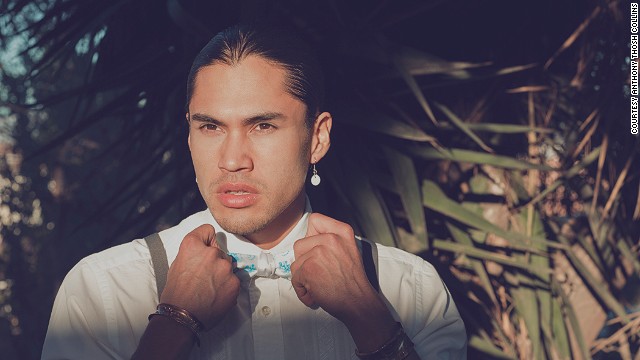
These masterpieces are featured in Beyond Buckskin Lookbook, which aims to highlight the Native-made fashion from couture to street wear. Feathered headdresses are still included in the lookbook, nonetheless. “It's disheartening to see Native American fashion as cheap knockoffs. To change that, we have to be the voice for what Native American fashion is, instead of just complaining about it,” says Yellowtail.

Image source: cnn.com


While designers want to introduce the “tasteful” and “appropriate” Native American fashion to mainstream America, their works are mainly intended for wide audiences regardless of most people’s ignorance of patterns and designs. “These are not your stereotypical Native American designs. They’re very contemporary, which is the point: to present new visions of what Native American fashion means. They incorporate designs that have a lot of meaning to them, but to the average viewer they might just look like a dragonfly or zigzag lines, and that's OK,” says Shelby Tisdale of the Los Angeles’ Autry National Center.

Elizabeth Rehnke is a proud fashionista and a seasoned traveler who muses about her trips to Asia, Australia, and Africa. Follow this Twitter page to catch the latest trend in fashion.

Friday, March 15, 2013

The past couple of seasons


Image Source: iamcatwalk.com 


Fashion has a way of waving off airs of nostalgia by always, always, upgrading a look. Still, there are some seasons that go undefeated by newness. Inspirations also flit across eras like historical facts; we never know when a fashion show could throw up a retrospective without the slightest hint of self-plagiarism. Some brands don’t have the luxury of slapping new forms of art on previous molds. Unless bestowed with the good graces of royalty (like Grace Kelly or Kate Middleton), high-profile creative directors should bear the criminy of rehashing. This hasn’t been a problem for Alexander McQueen, despite its creative director Sarah Burton teeing off the last Parisian catwalk this year before she gives birth. That collection was awesome, even by the standards of Alexander McQueen, forevermore burned into artisanal memory by featuring bridals with porcelain shards stitched to form.


 Image Source: guardian.co.uk


Alexander McQueen Spring/Summer 2013 still relied on the braced forms that give its collections eye-popping structure and stature. By all means, the clothes were neither overly puckish nor rigid. Tempering the over-the-top is the label’s magic wand, and SS 2013 had the floaty feel of a ‘50s summer outing while dodging nosy neighbors. If anyone blinked and missed the New York Fashion Week for Autumn/Winter 2013-2014, they couldn’t be sorrier than being bypassed by a secret John Galliano show for Oscar dela Renta. The designer knocked some cold water into a couture house pushed into the corner of its own success. The Galliano cape rode silently into a show trademarked by evening gowns in punch colors and sewn with golden patterns.


 Image Source: hellomagazine.com  


Liz Rehnke’s fashion preferences are as flexible as a change of seasons. See the evolution of her tastes in this blog.

Monday, February 4, 2013

The psychology of shoes: What women’s shoes say about them

Image source: redpoutylips.com

Some people judge women based on their footwear. For instance, one look at the feet of a lady in Prada heels can give an idea of her affluent lifestyle and modish personality.

But the Journal of Research in Personality says that there’s more to lifestyle and personality that people judge based on women’s shoes:

Women who are clingy and insecure tend to choose new-looking or well-kept shoes. This could be because they care more about what other people say.

Practical and functional shoes belong to agreeable women. These women are more likely to follow convention. They could be working in a company or organization where sociability and courteousness are important.

Image source: babble.com

Ankle boots belong to women with more aggressive personality. Ankle boots are attention-grabbing so timid women prefer not to wear them so as not to bring attention to themselves.

Uncomfortable shoes are usually worn by women with calm personalities. Women who wear uncomfortable shoes are innately cool so they do not fuss much about what others will think.

Liberal women wear less expensive shoes. This group of women includes the hippies who advocate simple living, and the environmentalists who love to recycle and reuse old things.

Women who tend to wear dull shoes have a harder time forming new relationships. It is believed that women who wear boring shoes have a boring personality.

Image source: ltkcdn.net

Get to know more about Liz Rehnke and her wide collection of shoes here.

Monday, January 7, 2013

REPOST: The Clothes Make the ‘Girls’

Karen Schwartz ponders on the fashion sense of the main characters of the HBO hit series Girls. In her article for The New York Times, she notes that Girls may be antiglamour, but, in keeping with the show’s search-for-identity theme, it is very much about personal style.

Image source: The New York Times
 
MAYBE it was the episode when Hannah, the main character on the HBO series “Girls,” wore a cardigan festooned with tomatoes to her first paid job, at a law office. Or the one in which Marnie, her uptight best friend, wore a bright little cocktail dress to a Bushwick loft party. Or the one where Jessa wore a long see-through eyelet dress over hot pink underwear to her gig as a nanny.

It’s hard to pin down the exact moment, but at some point while watching the show last spring, I had an unexpected flashback to an ensemble I wore when I was just out of college: a black romper with knickers paired with a white oxford shirt, a red necktie and tights with Lichtenstein-esque cartoons on them. I referred to this get-up as my “signature outfit” and wore it primarily on job interviews.

Such is the difference between “Girls,” whose second season begins on Jan. 13, and its most obvious predecessor, “Sex and the City.” You watched Sarah Jessica Parker et al and thought, I wish I had those shoes. You watch Lena Dunham and crew and think, There, with the grace of God, I wenteth.

The fashions on “Girls” may not be aspirational, but they are very much intentional. “We are very conscious about what the girls are wearing,” said Ms. Dunham, the show’s 26-year-old creator/writer/director, who plays Hannah. “We spend a lot of time talking about that outfit you can’t believe you wore but you know you spent three days dreaming up.”

The show’s costume designer, Jennifer Rogien, agreed. “The overall theme of the show is all the mistakes we go through when we’re trying to find our footing,” she said. “We wanted to embrace all those factors — the youth, the first job, the insecurity in relationships, both romantic and friendship — and see if we could reflect that through the clothing.”

Where “Sex and the City” created a high-end designer-driven fantasy, “Girls” strives above all else for authenticity. “We were really concerned about realism, verisimilitude,” Ms. Dunham said, adding that Jenni Konner, an executive producer, “is always there at my costume fittings to say, ‘That fits a little too well.’ ”

“She’s always calling out the potential for any TV-matchy-cutesy-ness,” Ms. Dunham said. Key to this ethos, Ms. Konner said, is “never having things that are beyond what these girls can afford.” The show’s most polished looks come from designers like Theory and Tibi, and the decidedly un-Carrie Bradshaw Ann Taylor. Characters also wear some clothes repeatedly. “Hannah had a pair of very well-loved Rachel Antonoff for Bass loafers that she wore a lot in Season 1,” Ms. Rogien said.

Ms. Dunham said that whenever she saw those shoes, “I was like: ‘Oh, yay! My loafers!’ ” (Side fact: Those shoes were designed by the sister of Jack Antonoff, who is a member of the Grammy-nominated band Fun., and also Ms. Dunham’s boyfriend.)
“It always makes me so crazy when people on shows have a new winter coat every day,” Ms. Dunham said. “I wore the same winter coat for three years after college, even after my dog peed on it.”

Like the experiences portrayed on the show, wardrobes are often imbued with autobiographical specificity. “I once got in a fight with one of my best friends while she was wearing a plastic dress,” Ms. Dunham said. “And the plastic dress became an example of our conflict — like, ‘You’re changing, you’re wearing a plastic dress.’ The plastic dress found a home in Season 2.”

The show often draws the viewer’s attention to its characters’ sartorial crimes. When Hannah reports to her first day of work at a coffee shop in a white dress, her boss tells her to go home and change, saying, “This isn’t a consumptive women’s hospital.” Seeing Marnie in a low-cut floral dress, a character greets her with, “Hello, J.Lo at the Grammys.” In a memorable moment early in Season 2, Marnie, played by Allison Williams, calls Hannah out on her hilariously awful neon mesh top by saying, “What are you wearing?”

“Girls” may be antiglamour, but, in keeping with the show’s larger search-for-identity theme, it is very much about personal style.
The wardrobes, said Ms. Rogien, who previously worked on “The Good Wife” and “Bored to Death,” “are extremely character-driven.”

For these characters, outfits are an important form of self-expression, Ms. Dunham said. “The clothes are really meant to reflect the fantasy the girls have about themselves and are sort of unsuccessfully fulfilling,” she said.

Each girl has her own distinct style. Hannah, Ms. Rogien said, is “lovingly disheveled.” Much of Hannah’s mix-and-match outfits comes from vintage and thrift stores and sometimes yield looks that don’t look that flattering on the character. “But she’s fully committed to them,” Ms. Rogien explained. In fact, she said, “sometimes we tailor the clothes to fit her even worse.”

Marnie, Hannah’s uptight best friend, suffers from the opposite problem. “She’s very put together,” Ms. Rogien said. Marnie favors structured sheath dresses and wears pieces from Black Halo and DVF. “She’s trying really hard to be professional, to be grown-up, and sometimes she overshoots.” As in Season 1, when she dons a Tibi dress and pumps for a party in Bushwick. “She’s wearing essentially a bat mitzvah dress to a grungy loft party,” Ms. Rogien said.

Shoshanna, the quirkily nervous New York University student played by Zosia Mamet, is the most concerned with outfit propriety. “She’s someone whose reading every book, every magazine and kind of using every fashion rule together at once,” Ms. Konner said.

And she shops, as Ms. Rogien explained. “She’s got both time and potentially a little money to do a little bit of shopping, she said. “We shop her in Bloomingdale’s and Saks.” Shoshanna is also a big fan of loungewear. She has been known to sport a Juicy Couture sweatsuit, and memorably watched TV in a purple peace-sign snuggy. (“I love that snuggy,” Ms. Rogien said.)

Ms. Mamet said: “It’s about the proper attire for every moment. Even her pajamas match.”

And the bohemian Jessa, played by Jemima Kirke, is, Ms. Dunham said, “a girl with an innately cool sense of style whose confidence can veer into the crazily inappropriate.” Not only did Jessa wear the aforementioned sheer dress to baby-sit (“it’s floor-length,” she said, by way of justification), but she also wore a bathrobe, Ugg boots and geisha-esque hair and makeup to meet up with an ex-boyfriend for a stroll in the park.

The character’s style is, in fact, quite similar to Ms. Kirke’s in real life. “I went to high school with Jemima,” Ms. Dunham said, “and dressing like Jemima was the top pursuit of every girl.”

Many of Jessa’s clothes have, in fact, been based on Ms. Kirke’s real-life outfits, and, in the case of some pieces, like her quickie wedding dress, culled from Geminola, the West Village store owned by her mother, the designer Lorraine Kirke. The elder Ms. Kirke’s repurposed vintage designs were featured on “Sex and the City,” and Ms. Dunham herself worked at Geminola during college.

The store, a small space on a quaint street with ripped wallpaper and tasseled chandeliers where the majority of prices fall in the $295-to-$695 range, seems like a place Jessa could grow up to own. “It’s a little bit Moulin Rouge brothel,” Ms. Dunham said, “but also sort of a sophisticated French salon. Jemima’s house is kind of that way, too.”

Ms. Dunham recalled that, when she worked there, “It would be like no one would come in all day, and then like some really fancy model would come in and buy 15 chandeliers and 9 dresses.”

In a recent phone interview, Ms. Kirke, the designer/proprietor, said that she didn’t recall Ms. Dunham’s time in her store. “But Jemima” — who could be heard in the background — “says I was horrible to her,” she added. “Basically, I started the store to give my daughters’ friends weekend jobs.”

Ms. Dunham’s own long connection to fashion raises an obvious question. Not only did Ms. Dunham, a child of two artists and a graduate of Brooklyn’s St. Ann’s School, work at Geminola, but she also was recently shot by Annie Leibovitz in the outfit that her baby sitter, the designer Zac Posen, made her for her high-school graduation.

Surely, Ms. Dunham’s personal style must diverge from Hannah’s? After all, she did wear Prada to the Emmys.

“Hannah dresses similarly to the way I dressed in late college or when I just graduated,” Ms. Dunham said. “I was less concerned with things looking good on me and more concerned with things being funny or interesting or quirky. I was a really big proponent of the sacklike bubble dress, unfortunately.”

Ms. Konner described Ms. Dunham’s look. “Lena dresses not only much older than Hannah, but much older than her age,” she said. “She’s very ladylike. I rarely see her wearing jeans, and when she does it’s with some kind of stylish blazer.”

Ms. Dunham said: “I always like to think of myself as dressing like a fancy lady at Radcliffe. That’s my fantasy about what’s going on.”

In this respect, Ms. Dunham, who has drawn much attention for her willingness to expose her decidedly non-Hollywood body, is equally notable for her choices when clothed.

When given creative control, few actresses have decided to create characters who look worse on television than they themselves do in life. Lucille Ball had no problem stuffing chocolates in her mouth off an assembly line or crushing grapes with her feet, but she did so in perfect hair and makeup. Tina Fey’s Liz Lemon makes self-deprecating jokes about her still-quite attractive appearance. Even Roseanne Barr, the foremother of female-driven sitcom realism, grew prettier, slimmer and more made-up as her show continued its run.

“The first time I met Lena,” Ms. Konner recalled, “was after seeing ‘Tiny Furniture,’ ” Ms. Dunham’s debut feature film. “I remember being like, Oh, my God, you’re so pretty! She plays herself down so much, which was surprising because it’s so unusual.”

Ms. Dunham said she knew “it wouldn’t be everyone’s choice.” But, she added: “I’m never tortured by seeing bad photographs of myself either. It’s not an ‘I need to do this for the sisterhood’ thing. It’s just a sense of trying to stay true to the characters and what we’re writing about.”


Fashion is just one of the many interests of Elizabeth Rehnke. Check out this Twitter account for more musings about fashion and personal style.

Tuesday, December 11, 2012

Party on! Dressing up for the holidays

Apart from finding fabulous gifts for loved ones, scouting for the perfect dress to brighten up the holidays is one task that stylish women such as Liz Rehnke take seriously. For these women, dressing up for the holidays means looking chic and elegant without going overboard.

Image credit: sisterfriends-together.org

So what dresses are perfect for the season?

Fashion magazine Marie Claire has come up with a holiday style guide for those who are looking for something fabulous to wear to chic cocktail parties and family get-togethers. Below are some of these festive getups:

Image credit: marieclaire.com

What would the holiday season be without a little bit of sparkle? A sequined dress like the one from Philipp Plein gives the LBD (little black dress) instant glam, making it a chic choice for the glitzy weekend shindig. For extra wattage, black tights and metallic heels can be paired with the sequined LBD. For a more daring look, a one-shoulder dress in gold sequins, like the one from Opulence England, is a great choice.

For the office Christmas bash, a dress with an appropriate amount of oomph mixed with some delicate lace detailing is both elegant and tasteful. An example would be the black ruffle lace dress from Notte by Marchesa. Meanwhile, Calvin Klein Collection’s metallic jacquard shift dress would make for the perfect holiday office party attire if the event calls for the usual office dress code.

Image credit: bluefly.com

As for family get-togethers, a conservative but stylish dress is appropriate, especially when grandparents and children are around. The gold babushka lace dress by Issa will certainly get the approval of elders and fashionistas alike. Meanwhile, a ‘60s-inspired polka dot bubbly dress from Rose is the perfect attire for toasting champagne with grandma over gingerbread.

Image credit: modcloth.com

For more fashion tips, visit this Facebook page.

Monday, November 12, 2012

Women and Shoes: A Love Story

Sharing an interesting article about women and their love for beautiful shoes. This was written by Mina Azodi and was published on Cosmopolitan.com.


Long before spiked heels with exotic names (Louboutin, anyone?) became objects of desire, chicks have been shoe-crazy. But recently, we got proof of exactly how crazy: While sales of most things have plummeted thanks to the recession, footwear sales have gone up compared to the same period last year. Yes, buying a pair of shoes has always had near-supernatural effects — like instantly updating an outfit from last year or just making you feel hotter than hell — but that doesn't fully explain how footwear is beating the odds in sales. Trust science to have the answer: Turns out, we've always been wired for shoe lust, even when the going gets tough.

Happy Feet
First of all, there's some serious mood-boosting going on when you try on any kind of apparel. "The neurotransmitter dopamine is released, providing a feel-good high, similar to taking a drug," says Martin Lindstrom, a branding expert for Fortune 100 companies and author of Buyology: Truth and Lies About Why We Buy. "The dopamine increases until you swipe your debit card." Usually, the high then flatlines, and guilt starts creeping in...except, that is, when the item you're purchasing is a pair of shoes. "Shoppers rationalize shoes as a practical buy — something they can wear multiple times a week — so they hold on to that pleasurable feeling longer," says Lindstrom.


But it's not just dopamine at work. Shoes' mood-altering traits also come from another brain reaction, says Lindstrom. Buying new footwear stimulates an area of the brain's prefrontal cortex termed the collecting spot. "Shoes are a collector's item, whether women realize they perceive them that way or not," says Suzanne Ferriss, PhD, editor of Footnotes: On Shoes. Just think of how they're often stored artfully on shoe trees and shelves. "They're like sculptures," says Ferriss. As a result, collecting each type provides a mini-adrenaline rush similar to the satisfaction a stamp collector gets when he acquires a rare find. 

A Higher Power 
All those wonderful feelings are intensified when you choose high heels...but again, it's biology, not Jimmy Choo, at work. "Like most animals, we're wired to associate height with power," says Helen Fisher, PhD, professor of anthropology at Rutgers University. "High heels can literally raise your status because you're taller when you wear them."

Heels carry historical significance as well, adding to their appeal. In previous centuries, only the wealthy wore high heels — everyone else had practical footwear to do manual labor. "Shoes were a measure of class," says Fisher, "and we still have a bit of that mind-set ingrained in us." 

Sexual Heeling 
Now go even higher — to stilettos — and another element rears its head: sex. Stilettos are undoubtedly foxy, but why, exactly? "When a woman wears them, she assumes a primal mating pose called lordosis," says Fisher. "Her butt lifts, and her back arches."

But there's more to it than how hot your ass looks. According to Daniel Amen, MD, author of The Brain in Love, our minds are structured in a way that may associate feet with sex. "The area of the brain that communicates with the genitals is right next to the area that deals with the feet," says Dr. Amen. "These regions share neural crosstalk, which may be why shoes can be erotic." And we thought it was just our lust for high style talking.