Friday, October 11, 2013

REPOST: Giambattista Valli: Looking Beyond the Clothes

This New York Times piece talks about Giambattista Valli’s coffee table book revealing the private side of the flamboyant designer.


Image Source: nytimes.com

Giambattista Valli’s career is a little young to be the subject of a coffee-table book. He started his signature label only in 2005 and became a couturier two years ago, so how to fill the nearly 400-page book ($100) being published this month from Rizzoli?
“I wanted to do something different,” Mr. Valli said. “I wanted to get naked. I didn’t want to show only the facade but to invite the reader into the most private side of my profession.”
He is not literally naked. Rather, Mr. Valli is barely seen in the book, beyond a few images of him working on his collection, adjusting the details, or in a portrait by Francesco Clemente that shows the designer wearing his customary pearl necklace.
But you do see his inspirations clearly, like how dresses that appear to be made of hydrangea blossoms are linked to the sculptures of Louise Bourgeois and Piero Manzoni. Mr. Valli also included an image of Lee Radziwill and Jackie Kennedy sitting on the ground because it showed the sort of relaxed beauty that informs his work. “This not an egocentric kind of book,” he said. “This is simply my method that I wanted to share with other people.”

Florida-based Elizabeth Rehnke is into fashion, sports, and travelling. Like this Facebook page to stay updated on the fashionista’s latest pursuits.


Tuesday, August 27, 2013

REPOST: Feel-Good Fashion: The New Black

Is the fashion world transforming to "a world of good goods?" In their article for The Wall Street Journal, Laura Neilson and Meenal Mistry discuss how a growing number of companies are laying bare everything consumers could ever want to know about—from the making of their T-shirts to their tote bags.

HOLY COW | Made by hand, of locally sourced leather, this bag meets the ethical standards set by new e-commerce site Zady. Alice D Milano Bag in Taupe and Black, $475, zady.com (Image source: wsj.com)

A FEW WEEKS AGO, Michael Preysman, the founder of fashion label Everlane, and his head of creative, Alexandra Spunt, went on a seven-day road trip through China to visit the factories where their silk blouses and cashmere sweaters are made. The purpose of the sojourn: to check in with their factories, and share their findings with customers via videos and photos to be posted on the Everlane website.

An earlier video series showing their T-shirt factory in Los Angeles had been quite popular with online visitors, said Mr. Preysman. "So we said, 'Hey why don't we tackle China?' "

The reason for the journey was partly to address skepticism surrounding Chinese facilities. "We wanted to clear up this misconception around China," said Mr. Preysman. "You can actually work with really great factories over there. And for silk, China is the best in the world." Videos and detailed images of the trip are now on the company's Tumblr page and will soon appear on its website, alongside products made there.

Everlane isn't the only fashion brand to make transparent production central to its philosophy. Just as the Slow Food movement prizes practices that are gentle on the land and the body, a wave of labels and retailers are focusing on socially responsible methods. These companies appeal to the growing number of consumers who want to know what kind of impact their purchases will have—both on the environment and, now more than ever, on other human beings.

Sweatshop labor—and the ethical issues surrounding it— is nearly as old as the Industrial Revolution. In more recent history, Nike was widely criticized for its factory practices in the '90s and early '00s; but the company has made efforts to improve its methods. Since 2005, Nike discloses the name and address of every factory it uses.

However, the issue has exploded in the past year after two major factory disasters in Bangladesh together killed more than 1,200 garment workers who were making clothes for Western companies. In response, many large companies—including H&M; Inditex, which owns Zara; and PVH, which owns Calvin Klein and Tommy Hilfiger—recently signed the Accord on Fire and Building Safety in Bangladesh, an unprecedented agreement between companies and labor unions. "It's binding and enforceable; it isn't a voluntary program," said Scott Nova, the executive director of the Worker Rights Consortium, which helped develop the Accord. "There's an actual commitment from the brands and retailers to pay for the cost of making factories safe, which is a commitment they've never made before."
Still, wary consumers tend to flock to businesses that are small and independent. "The fashion industry is so globalized and uses such convoluted supply chains," said Elizabeth L. Cline, author of "Overdressed: The Shockingly High Cost of Cheap Fashion." "It's really the smaller fashion companies who are going to be able to provide true transparency to consumers."

Bringing many of those companies' products together in a single stylish, information-crammed location is the goal of Zady, an e-commerce site set to launch Aug. 27. Zady (pronounced zay-dee, which is both Yiddish for "grandfather" and an Arabic girl's name meaning "prosperity"), is the brainchild of Maxine Bédat, a former law clerk for the United Nations, and Soraya Darabi, a former digital media strategist and co-founder of the app Foodspotting. The site will carry some 40 labels, both American and international, including Steven Alan, Imogene + Willie denim and the English heritage brand Gloverall—a roster the owners plan to keep expanding. "We're not trying to be the neighborhood shop," said Ms. Darabi. "We want to be a global destination for people who care about the origins of products."

Ms. Bédat has some experience in ethical retailing. In 2010, she co-founded the Bootstrap Project, a nonprofit site, while working in Tanzania at the International Criminal Tribunal for Rwanda, which was prosecuting perpetrators of the genocide. In her free time, she would explore markets where she noticed that many so-called "local crafts" were made in China, while real artisans had trouble finding customers. "In globalization, those jobs and traditions were getting lost," said Ms. Bédat. "The idea behind Bootstrap was to revive them and bring jobs back to the community." On its website, you can buy a printed clutch bag from Zambia or provide a microloan to its maker—or both.

Ms. Darabi, who worked for the New York Times, was an adviser for Bootstrap. But in the pair's conversations, said Ms. Darabi, "we realized there was a for-profit venture we needed to talk about."

Enter Zady. The site uses icons to let shoppers know at a glance if something is locally sourced (to qualify if an items' raw materials come from within 100 miles of where it's made), handmade, made in the U.S., made from high-quality raw materials, environmentally conscious (e.g. made with vegetable dyes) and whether it's affiliated with the Bootstrap Project.

The site's vetting process is a work in progress. Ms. Bédat and Ms. Darabi, who are based in New York, research the practices of every brand they carry in different ways. They've visited some factories, but in many cases rely on the brands to disclose the information, requiring owners to sign contracts verifying the authenticity of their claims about sourcing and production.

"We're a small team," said Ms. Bédat. "We don't have people who are able to fly out and report back." As a result, they've turned down brands that work in countries with a known record of human-rights abuses. Instead, said Ms. Bédat, they've focused on American and European products, often from vertically integrated designers who don't outsource, making traceability a simpler prospect. As they branch out to developing countries, their plan is to work with labor organizations and human rights groups to verify that workers are safe and well-compensated.

One part of this quest for transparency is storytelling, which plays a major role in marketing strategy. Shoppers browsing Zady for Imogene + Willie's slim-cut indigo denim jeans ($225) or winter coats by Gloverall ($625) will be able to read a short brand history that the site's creators hope will provide a greater incentive to click "Buy."

The power of the story is something clearly understood by Claire Mazur and Erica Cerulo, the duo behind Of a Kind, a New York-based e-commerce site that sells limited-edition apparel and accessories by independent designers. Each label gets an introduction, often followed by related featurettes, like one on bag designer Clare Vivier's favorite Los Angeles haunts and another on a vintage shopping trip she took in her hometown of St. Paul, Minn.

For Ms. Mazur, a former arts consultant, and Ms. Cerulo, who was an editor at Details and Lucky magazines, the stories have been essential. "How do you convince someone to spend $300 dollars on a designer they might not have heard of, on a product they've never touched?" said Ms. Mazur. "If you can tell them that story and give them that emotional attachment, we think that's going to work." Last year, Ms. Mazur said, the company's revenues were up 300% from the previous year, and the site has been turning a profit for the past nine months.

Another factor in the decision to buy is trust in fair pricing. Certainly this new conscious consumer doesn't want to save money by exploiting third-world labor, but she also doesn't want to be fleeced. That's an area where Belgian designer Bruno Pieters's venture, called Honest By, which was founded early last year, might be unmatched.

Mr. Pieters's company provides painstakingly detailed information for each item it sells: the source of every material, trimming and thread; the address and owner of its production facility; its cost breakdown and markup, as well as its carbon footprint. "I never thought about transparency or things like sustainability. You just assume it will be fine," said Mr. Pieters, who used to design for his own luxury label, as well as Hugo Boss, before taking a sabbatical in 2009.

Everlane, too, publishes the cost breakdown of each piece on its blog. The San Francisco-based company said it is able to offer high-quality basics like Supima cotton T-shirts and silk button-down blouses at prices lower than those of luxury competitors by selling only online, which keeps overhead to a minimum. Everlane products are sold at a markup of about 220% versus the industry norm of 500% to 800% times the cost-to-manufacture price.

Unlike Mr. Pieters, however, Everlane's Mr. Preysman doesn't disclose the names and addresses of factories, explaining that he doesn't want competitors moving in on his turf. However, the company uses third-party auditors to ensure its living-wage and safety standards.
Still, wary consumers tend to flock to businesses that are small and independent. "The fashion industry is so globalized and uses such convoluted supply chains," said Elizabeth L. Cline, author of "Overdressed: The Shockingly High Cost of Cheap Fashion." "It's really the smaller fashion companies who are going to be able to provide true transparency to consumers."

Bringing many of those companies' products together in a single stylish, information-crammed location is the goal of Zady, an e-commerce site set to launch Aug. 27. Zady (pronounced zay-dee, which is both Yiddish for "grandfather" and an Arabic girl's name meaning "prosperity"), is the brainchild of Maxine Bédat, a former law clerk for the United Nations, and Soraya Darabi, a former digital media strategist and co-founder of the app Foodspotting. The site will carry some 40 labels, both American and international, including Steven Alan, Imogene + Willie denim and the English heritage brand Gloverall—a roster the owners plan to keep expanding. "We're not trying to be the neighborhood shop," said Ms. Darabi. "We want to be a global destination for people who care about the origins of products."

Ms. Bédat has some experience in ethical retailing. In 2010, she co-founded the Bootstrap Project, a nonprofit site, while working in Tanzania at the International Criminal Tribunal for Rwanda, which was prosecuting perpetrators of the genocide. In her free time, she would explore markets where she noticed that many so-called "local crafts" were made in China, while real artisans had trouble finding customers. "In globalization, those jobs and traditions were getting lost," said Ms. Bédat. "The idea behind Bootstrap was to revive them and bring jobs back to the community." On its website, you can buy a printed clutch bag from Zambia or provide a microloan to its maker—or both.

Ms. Darabi, who worked for the New York Times, was an adviser for Bootstrap. But in the pair's conversations, said Ms. Darabi, "we realized there was a for-profit venture we needed to talk about."

Enter Zady. The site uses icons to let shoppers know at a glance if something is locally sourced (to qualify if an items' raw materials come from within 100 miles of where it's made), handmade, made in the U.S., made from high-quality raw materials, environmentally conscious (e.g. made with vegetable dyes) and whether it's affiliated with the Bootstrap Project.

The site's vetting process is a work in progress. Ms. Bédat and Ms. Darabi, who are based in New York, research the practices of every brand they carry in different ways. They've visited some factories, but in many cases rely on the brands to disclose the information, requiring owners to sign contracts verifying the authenticity of their claims about sourcing and production.

"We're a small team," said Ms. Bédat. "We don't have people who are able to fly out and report back." As a result, they've turned down brands that work in countries with a known record of human-rights abuses. Instead, said Ms. Bédat, they've focused on American and European products, often from vertically integrated designers who don't outsource, making traceability a simpler prospect. As they branch out to developing countries, their plan is to work with labor organizations and human rights groups to verify that workers are safe and well-compensated.

One part of this quest for transparency is storytelling, which plays a major role in marketing strategy. Shoppers browsing Zady for Imogene + Willie's slim-cut indigo denim jeans ($225) or winter coats by Gloverall ($625) will be able to read a short brand history that the site's creators hope will provide a greater incentive to click "Buy."

The power of the story is something clearly understood by Claire Mazur and Erica Cerulo, the duo behind Of a Kind, a New York-based e-commerce site that sells limited-edition apparel and accessories by independent designers. Each label gets an introduction, often followed by related featurettes, like one on bag designer Clare Vivier's favorite Los Angeles haunts and another on a vintage shopping trip she took in her hometown of St. Paul, Minn.

For Ms. Mazur, a former arts consultant, and Ms. Cerulo, who was an editor at Details and Lucky magazines, the stories have been essential. "How do you convince someone to spend $300 dollars on a designer they might not have heard of, on a product they've never touched?" said Ms. Mazur. "If you can tell them that story and give them that emotional attachment, we think that's going to work." Last year, Ms. Mazur said, the company's revenues were up 300% from the previous year, and the site has been turning a profit for the past nine months.

Another factor in the decision to buy is trust in fair pricing. Certainly this new conscious consumer doesn't want to save money by exploiting third-world labor, but she also doesn't want to be fleeced. That's an area where Belgian designer Bruno Pieters's venture, called Honest By, which was founded early last year, might be unmatched.

Mr. Pieters's company provides painstakingly detailed information for each item it sells: the source of every material, trimming and thread; the address and owner of its production facility; its cost breakdown and markup, as well as its carbon footprint. "I never thought about transparency or things like sustainability. You just assume it will be fine," said Mr. Pieters, who used to design for his own luxury label, as well as Hugo Boss, before taking a sabbatical in 2009.

Everlane, too, publishes the cost breakdown of each piece on its blog. The San Francisco-based company said it is able to offer high-quality basics like Supima cotton T-shirts and silk button-down blouses at prices lower than those of luxury competitors by selling only online, which keeps overhead to a minimum. Everlane products are sold at a markup of about 220% versus the industry norm of 500% to 800% times the cost-to-manufacture price.

Unlike Mr. Pieters, however, Everlane's Mr. Preysman doesn't disclose the names and addresses of factories, explaining that he doesn't want competitors moving in on his turf. However, the company uses third-party auditors to ensure its living-wage and safety standards.

Experts in the field of ethical sourcing and trade still encourage skepticism, no matter how warm and fuzzy a website makes one feel. "There is a lot of consumer concern, and there is a tendency for smaller companies to want to exploit it," said Mr. Nova of the Worker Rights Consortium. "That can be a very positive motivation, but the concern is that there are people who, out of cynicism or lack of understanding, are not making verifiable claims."

Elizabeth Rehnke lauds the move of fashion houses to become more transparent about how they produce their goods. Like this Facebook page for more discussions and updates about the fashion industry.

Sunday, July 21, 2013

Punk fashion goes beyond chaos

Image source: metmuseum.org

Does punk really mean chaos? Does punk provoke anarchy? Does punk desire to overthrow the hippies? These are some of the reflections of the Costume Institute of the Metropolitan Museum of Art in New York in the exhibition Punk: From Chaos to Couture.


Image source: metmuseum.org

The mingling of fashion and punk is often misconstrued as an unfair juxtaposition, with both frequently overstepping one another in redefining each other. If the Elizabeth Rehnke style book is to be consulted, the key to understanding both is not in pitting them against each other as separate art entities, but by contextualizing them in a single process of transforming an idea into a visible creation that submits to the creators’ liking.

Image source: metmuseum.org

The Punk: From Chaos to Couture exhibition deliberately goes beyond chaos to allow the designers’ intellectual forces merge with established realities surrounding punk culture and to let the designers’ own point of view flow freely through their creations. Fashion becomes the designers’ blank canvass while their cultural inclination becomes the style – this complementarity steers spectators toward cultural investigation.

Click here for more fashion and style tidbits, courtesy of Elizabeth Rehnke.

Wednesday, May 29, 2013

REPOST: To Avoid Jet Lag This Summer, Travel Like a Scientist

What works best in combating jet lag? The Wall Street Journal’s Amy Dockser Marcus discusses what most researchers believe is “the best formula” to fight the dreaded feelings of jet lag.

Image source: wsj.com

Scientists are studying a wide range of strategies to help long-distance travelers avoid the dreaded feelings of jet lag.

Frequent fliers often have sworn-by practices to combat jet lag, whether it's adjusting a sleep schedule days before a trip, taking the hormone melatonin, seeking out bright light at certain times, or forcing the body to eat and sleep on local time immediately upon arrival.

What works best? The news from most researchers appears to be that the best formula is a combination of all of these tactics.

As a general rule, it takes about a day for each time zone traveled for a person's body clock to catch up to the local time, researchers say. The severity of jet lag varies widely. Traveling east, to a later time zone, seems to be much harder than traveling west. Crossing more time zones makes it more difficult to avoid symptoms, which include sleepiness and confusion. Older people and very young people fare worse with jet lag, probably because older people's body clocks are deteriorating and very young people's body clocks are still developing, researchers believe.

Helen Burgess, director of the biological rhythms research lab at Rush University Medical Center, developed a plan for herself to avoid jet lag during a trip to Egypt, eight time zones away from her home in Chicago. For several days before the trip, Dr. Burgess advanced her bedtime by one hour each night, and got up an hour earlier each morning. She took a low dose of melatonin in the early afternoon to help her reset her body clock. And she sought out bright light in the very early morning, avoiding wearing sunglasses to maximize her exposure, to wake up her body clock.

In Egypt, Dr. Burgess says she had just one morning when it was hard to get up. "Without the preflight shift [in schedule] I could have had jet lag for over a week, pretty much the duration of the trip," she says.

While most researchers agree that light exposure and melatonin can help reduce the symptoms of jet lag after arriving at your destination, not everyone thinks it makes sense to switch sleep schedules before a trip, which can cut into social time with family and friends. "I don't see the point of giving yourself jet lag before you leave," says Alfred J. Lewy, director of the sleep and mood disorders lab and senior vice chairman of the department of psychiatry at Oregon Health & Science University.

Some of the new thinking about jet lag is coming from work with animals. Gene Block, a professor of psychiatry and biobehavioral sciences at University of California, Los Angeles, and colleagues found that by middle age, the signal the master body clock in the brain sends out to other internal clocks to help resynchronize the different processes gets weaker. As a result, it took longer in experiments for older mice to adjust to time changes than younger mice. Researchers often chose time-zone shifts of six hours in their studies.

Some of the research in mice indicates that the master clock typically adjusts to a new time zone after around three days. However, some other internal clocks readjusted at different rates and weren't all working correctly until the eighth day.

Dr. Block, who is 64 years old, says he has noticed that his jet lag lasts longer as he has aged. On a recent trip to Doha, he says he ate his meals on local time even when he wasn't hungry to try help his liver get synchronized more quickly to the local clock.

Most people have body clocks that run longer than 24 hours, which generally makes it easier to fly west than east, researchers say. When people fly west, they have to stay up later before going to bed. That is easier to do than having to go to bed earlier than normal.

Seeking out day light at certain times, and avoiding bright light at other times, are some of the main strategies researchers recommend for resetting the body clock faster. Daylight is one of the key clues the master clock in the brain receives from the retina that it needs to resynchronize. In general, travelers going east are advised to seek out afternoon light, and travelers heading west should seek out morning light. If the climate or hour of the day at the new destination don't allow for lots of light, a small, portable light box, some of which double as an alarm clock, can be purchased.

Avoiding light at certain hours also is important to help the body clock reset. Traveling east, it is generally advised to avoid morning light; going west, avoid afternoon light. But researchers say these recommendations need to be tailored to each individual, depending on whether you are normally an early riser, and what the local time is when you arrive.

Melatonin is another popular way to help shift the body clock faster to a different time zone. Dr. Lewy, of Oregon Health & Science, recommends taking a small dose at the local bedtime every evening until the body clock resets. When traveling west, he recommends taking melatonin during the second half of the night. Although it is sold over-the-counter, melatonin isn't approved by the Food and Drug Administration and researchers disagree on the optimal dose. A doctor should be consulted before taking it.

Some people have shifted their body clocks but not everyone has the discipline or interest in such regimens to ease jet lag. Most travelers arrive in a new time zone, take a sleeping pill to fall asleep at bedtime, drink coffee during the day to stay awake, and wait it out until they feel better, says Charmane Eastman, a professor of behavioral sciences at Rush University Medical Center in Chicago, who has devised strategies for people seeking to minimize jet lag. "You have to be motivated to want to do something about it," she says.

For short trips, readjusting the body's clock might not seem worth the effort. Jim Waterhouse, a professor of biological rhythms at Liverpool John Moores University in Liverpool, England, says he often recommends that people crossing three time zones or less and only staying three days or less might want to consider maintaining the same sleeping and waking schedule from home rather than trying to shift the body clock. "Keep your watch set to the time at home and act accordingly," he says.


Fashionista Elizabeth Rehnke is also travel enthusiast. Check out this Facebook page for select updates on fashion and travel.

Monday, May 6, 2013

Fab apps for beauty, fashion, and shopping

In addition to jewelry and handbags, girls can now use mobile phone applications to complement their style. These apps are sure to provide entertainment and information on their beauty, fashion, and shopping interests. Most importantly, they can be downloaded for free.

Image source: biztechdaybiztechday.com


Here are four of the hottest:


1. Pose
This application allows users to create collections of their favorite fashion “poses,” or looks. Users are also asked a series of questions to determine their style, and then get recommendations of fashionistas to follow and items to buy. Pose is perfect for those who want to purchase items or are simply looking for style inspiration.


Image source: heartifb.com


2. GoodGuide
Girls who care for their appearance as much as they care for the environment can use this free app to find beauty products that are safe, environment-friendly, and cruelty-free. GoodGuide also provides users the products’ barcodes as well as their rating for health, sustainability, and social responsibility.

Image source: ipod.about.com


3. SpaFinder
With this app, girls can locate nearby salons and spas and book appointments. It also has access to customer reviews and wellness promotions.

Image source: spareviewmag.com


4. Mirror
This app is the solution for those who need check to their faces straightaway. The instant mirror also provides better reflection because it can be set in different lighting, brightness level, and zoom options.

Image source: play.google.com


Not only do these apps provide an easier way for styling, they also encourage individuality and open up a new world of opportunity for girls to look and feel good. And sometimes, girls can just browse through them and see what strikes their fancy, thereby stirring their creativity.


As a fashionista-slash-savvy shopper, Liz Renhke delves into the up-to-the-minute trends in beauty and fashion. Follow this Twitter page to get fresh styling ideas.


Tuesday, April 9, 2013

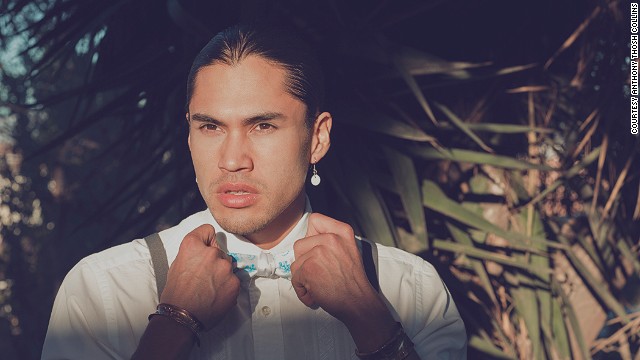
Native American fashion beyond the headdress

When Victoria’s Secret model Karlie Kloss walked down the catwalk with a feathered headdress during the recent VS fashion show, it was widely criticized by the Native American community. To them, the headdress is a symbol of respect worn by tribal chiefs and warriors. Wearing the headdress with nothing but skimpy lingerie has apparently offended the community.

Image source: foxnews.com


There is more to Native American fashion that mainstream America often fails to recognize. Beyond the stereotyped “native look” of headdresses, fringed jackets, and buckskins, there are various collections that represent the Native American culture in a tasteful and respectful way. These elegant Native designs include the works of Project Runway contestant Patricia Michaels and the couture gowns of Bethany Yellowtail.

Image source: beyondbuckskin.blogspot.com

These masterpieces are featured in Beyond Buckskin Lookbook, which aims to highlight the Native-made fashion from couture to street wear. Feathered headdresses are still included in the lookbook, nonetheless. “It's disheartening to see Native American fashion as cheap knockoffs. To change that, we have to be the voice for what Native American fashion is, instead of just complaining about it,” says Yellowtail.

Image source: cnn.com


While designers want to introduce the “tasteful” and “appropriate” Native American fashion to mainstream America, their works are mainly intended for wide audiences regardless of most people’s ignorance of patterns and designs. “These are not your stereotypical Native American designs. They’re very contemporary, which is the point: to present new visions of what Native American fashion means. They incorporate designs that have a lot of meaning to them, but to the average viewer they might just look like a dragonfly or zigzag lines, and that's OK,” says Shelby Tisdale of the Los Angeles’ Autry National Center.

Elizabeth Rehnke is a proud fashionista and a seasoned traveler who muses about her trips to Asia, Australia, and Africa. Follow this Twitter page to catch the latest trend in fashion.

Friday, March 15, 2013

The past couple of seasons


Image Source: iamcatwalk.com 


Fashion has a way of waving off airs of nostalgia by always, always, upgrading a look. Still, there are some seasons that go undefeated by newness. Inspirations also flit across eras like historical facts; we never know when a fashion show could throw up a retrospective without the slightest hint of self-plagiarism. Some brands don’t have the luxury of slapping new forms of art on previous molds. Unless bestowed with the good graces of royalty (like Grace Kelly or Kate Middleton), high-profile creative directors should bear the criminy of rehashing. This hasn’t been a problem for Alexander McQueen, despite its creative director Sarah Burton teeing off the last Parisian catwalk this year before she gives birth. That collection was awesome, even by the standards of Alexander McQueen, forevermore burned into artisanal memory by featuring bridals with porcelain shards stitched to form.


 Image Source: guardian.co.uk


Alexander McQueen Spring/Summer 2013 still relied on the braced forms that give its collections eye-popping structure and stature. By all means, the clothes were neither overly puckish nor rigid. Tempering the over-the-top is the label’s magic wand, and SS 2013 had the floaty feel of a ‘50s summer outing while dodging nosy neighbors. If anyone blinked and missed the New York Fashion Week for Autumn/Winter 2013-2014, they couldn’t be sorrier than being bypassed by a secret John Galliano show for Oscar dela Renta. The designer knocked some cold water into a couture house pushed into the corner of its own success. The Galliano cape rode silently into a show trademarked by evening gowns in punch colors and sewn with golden patterns.


 Image Source: hellomagazine.com  


Liz Rehnke’s fashion preferences are as flexible as a change of seasons. See the evolution of her tastes in this blog.